
Thomas Fraser
Good enviro reporting from Knox News: Smokies air quality and more salamanders!
News Sentinel: State takes path of least resistance with air-quality plans; and researchers are gauging how Southern Appalachian salamanders will respond to climate change.
KNOXVILLE — Local journalists delivered a double tap of critical conservation coverage this week:
The state air quality board is outlining its 10-year haze-reduction plan for Tennessee, and some enviros are arguing the state is not going much beyond the bare minimum required by the feds. That was the crux of a detailed report from News Sentinel reporter Anila Yoganathan that also examined lingering air quality and deposition issues in Great Smoky Mountains National Park. While air quality in some aspects has improved in recent decades, there are still some insidious issues that affect the park’s viewshed, and on occasion, the health of park visitors, too. Acid and nitrate deposition continue to take a toll on park streams.
The report is extensive. A digital subscription is required to view the stories at Knox News, but hopefully they’ll open it up as an introductory freebie.
Speaking of streams and the threat they face:
Science reporter Vincent Gabrielle waded into a story about research at the Tennessee Aquarium delving into the effects of global and regional climate change on Southern Appalachian freshwater denizens such as the black-bellied salamander.
“Their teeming millions make up a substantial proportion of the animal life of a forest. In the headwaters of the Appalachian Mountains, salamanders frequently outnumber fish, birds and other small animals,” Gabrielle reported.
“Lungless salamanders, like the black-bellied salamander, breathe only through their skin. They will notice water pollution, including sediment, agricultural runoff or acidic seepage from old mines, and relocate to cleaner water.” — If they can, we might add. Too often, that is impossible for them.
Something is rotten in Russia

Menacing military buildup on Ukraine borders and Orwellian denials could snuff peaceful scientific cooperation
OAK RIDGE — I went to Russia in 2000 on one of the most extraordinary trips of my life. It was a long time ago, and a generation has passed, but I was left with many enduring and positive impressions of the country and its people.
Knoxville to citizens: ’Post up!
City announces plan to encourage composting by residents and businesses
KNOXVILLE — What do you do with your meatless leftover food scraps?
Sometimes here at Hellbender Press global headquarters in South Knox we throw them in the yard for winter critters; occasionally sneak some to the dogs; bury them in the vegetable garden; or sometimes slip them into the relatively unused backyard composter by the cat graves way in the back.
It seems such a waste to throw it away or even produce it in the first place, and centralized landfill food scraps spew methane and linger for years. It’s a big gnarly stewpot.
- knoxville composting
- knoxville community compost project
- city of knoxville compost dump
- composting
- is composting a good thing for the environment
- local knoxville produce
- can restaurants compost?
- is it good to compost?
- can i take my compost somewhere in knoxville
- battlefield farms
- city possum farm
- food waste
- food scrap
- knoxville recycling center
- recycling facility
Imagine a
Sign up for cleaner electricity in the Tennessee Valley!
There’s a huge opportunity to fight for clean energy jobs in the Cumberland Fossil plant area! The Tennessee Valley Authority is planning to retire the Cumberland Fossil Plant in the coming years, but if local residents don’t take action, TVA will replace the coal fire with expensive, dangerous, and polluting natural gas –– a fossil fuel that harms the environment and would require a massive gas pipeline that would run through several nearby counties.
Stand with local residents and tell the TVA you want cleaner and safer electricity! Sign on to this public comment for the TVA Board Meeting on February 10!
As global forests fall to blades, tree species go unknown
 NASA
NASA
BBC: There are 14 percent more tree species than supposed
Nearly 9,000 global tree species haven’t been identified, based on a database that analyzed millions of trees within 100,000 forest segments around the Earth.
Of the 73,300 estimated tree species, the researchers predict there are 9,200 yet to be discovered. Most of the undiscovered and rare species are believed to be in beleaguered tropical rainforests, such as those in the Amazon or Central Africa.
“The researchers used statistical techniques to predict the likely number of tree species, correcting for gaps in existing data,” the BBC reported.
“The findings suggest more must be done to protect the incredible life forms needed for food, timber and medicine and to fight climate change by sucking carbon dioxide from the air.”
E.O. Wilson left energy in Knoxville
Knox County commish subdivides Hardin Valley despite opposition. Again.
WATE: Knox County Commission greenlights more Hardin Vally development
Knox County Commission approved yet another expansive subdivision in the rapidly developing Hardin Valley area despite pleas from area residents to pause and take a deep breath as residential and commercial development outstrips and overwhelms first responders, streets, roads and schools and other infrastructure — and any pretense of responsible suburban planning and zoning.
The decision comes on the heels of similar land-use fights (such as those reported by Hellbender Press) originated by citizens as housing shortages mean such disputes aren’t likely to go away anytime soon.
“Look at all the development projects instead of each one individually. Look at all the projects in the pipeline, not just the few hundred that are on the books right now,” said Knox County Planning Alliance consulting engineer Lee Muller, according to WATE reporting. “There’s like 4,500 in the pipeline in some stage of approval or construction in the county right now. They need to look at all that and what that requires in terms of schools, sewer, police, fire stations,” Muller told WATE.
(Correction 26 Jan. 2022: During the meeting Muller said 2021 ended with 4,499 homes under construction in the county, not the country. After reported by Hellbender Press, this transcription error was corrected on the WATE site too.)
Outgoing Smokies forester Kristine Johnson leaves behind a legacy of science and communication
 Appalachian Voices
Citizen Times: Smokies forester bids adieu to her arboreal home
Good read here from the Asheville newspaper about the retirement of Great Smoky Mountains National Park Supervisory Forester Kristine Johnson.
In her three decades at the Smokies, she has tackled issues ranging from exotic and invasive plants to the slow and disastrous demise of the park’s hemlocks due to the hemlock wooly adelgid.
“‘The work we do includes forest health in all aspects,’ said Johnson, who is retiring this month after more than 30 years in the Smokies,” Frances Ligart reported. “Her career has been devoted to reducing the introduction into the park of exotic plants, insects, and diseases.”
As millions flee to nature, Smokies visitation posts another record
 Hellbender Press
Park sets visitation record with 14.1 million visits in 2021
Some 14 million people visited Great Smoky Mountains National Park last year, as Americans and foreign tourists continued their flight to nature in the face of the Covid pandemic.
Here’s the news release from the National Park Service:
“Great Smoky Mountains National Park experienced the busiest year on record with 14,137,812 visits. Visitation exceeded the 2019 record by 1.5 million visits and 2020 visitation by more than 2 million visits. The park has increasingly become a year-round destination with eight monthly visitation records set during winter and spring months in 2021.”
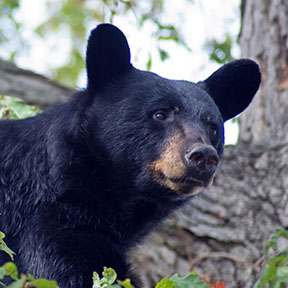
Mountain bears in crosshairs of NC sanctuary management plan
 North Carolina Wildlife Resources Commission
Smoky Mountain News: WNC bear-management plan raises some hackles
State wildlife officials in North Carolina are proposing a rule change that would allow hunters to kill black bears in areas that are currently off-limits to “harvesting” of the animals.
The North Carolina Wildlife Resources Commission cites the population boom of the bruins in its consideration of opening up permit hunting in sanctuaries such as Panthertown, Standing Indian and Pisgah.
The proposal is among changes to state wildlife law suggested by the commission for 2022-2023 hunting seasons.
“Allowing hunting in additional sanctuaries will help control the growing population as increased human development reduces hunter access outside the sanctuaries, the Wildlife Commission says, and it will also cut down on human-bear conflicts in those areas,” according to reporting from Holly Kays of Smoky Mountain News.
An outline and rationale for the bear sanctuary hunting rule is available on the North Carolina Wildlife Resource Commission website.