
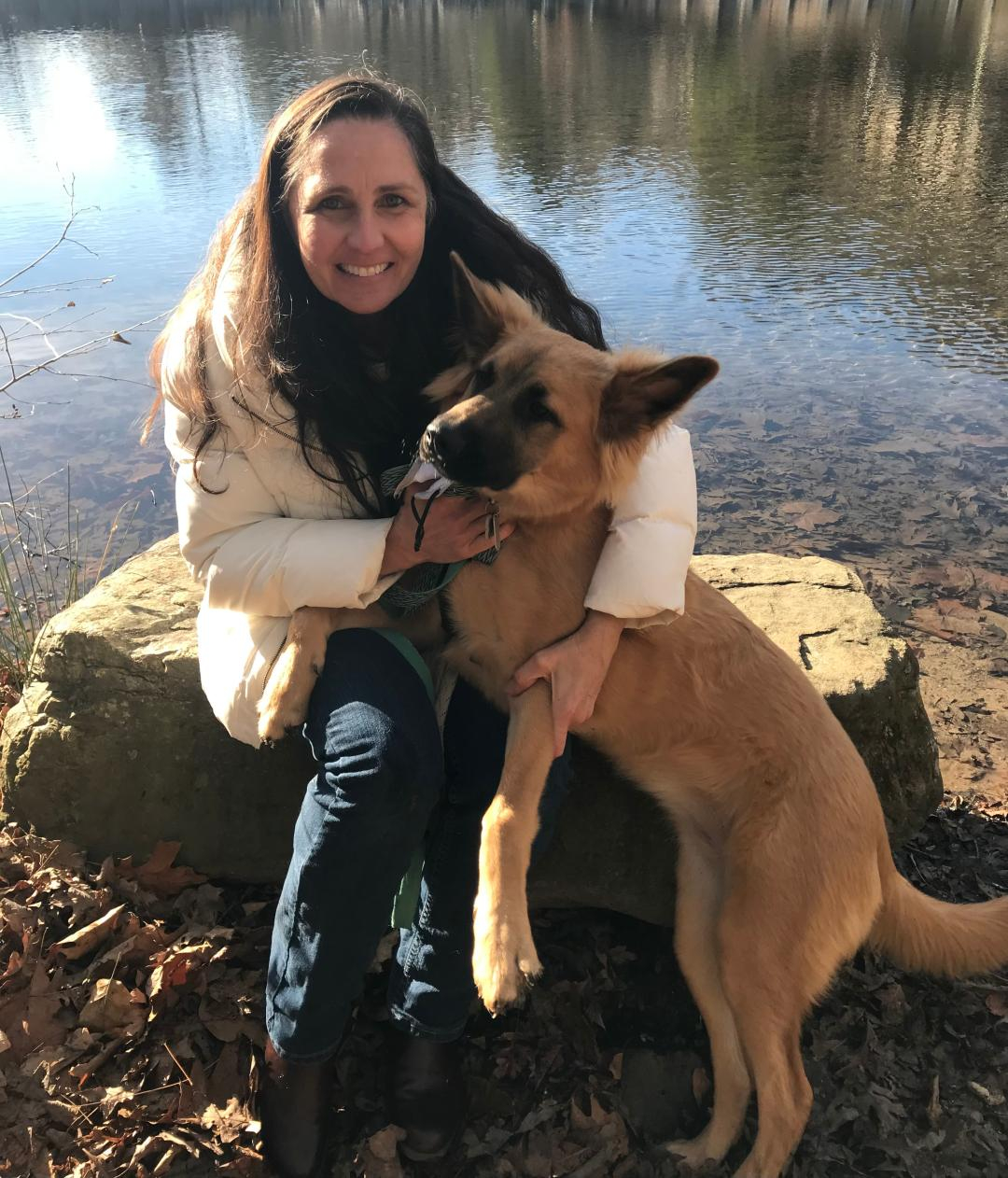
CCA’s toolkit has three major phases: planting seeds, nurturing growth, and deepening roots. The program’s resources cover a wide range of environmental areas like solar power, sustainable transportation and local food. For each subject, there’s information at each of the three phases, depending on where a congregation is in their creation care journey.
Lehman received a master’s degree in theology, with a focus on environmental theology, from Columbia Theological Seminary in Decatur, Georgia. Her personal interest in environmentalism was sparked under the Carter administration in the late ‘70s.
“I was in high school and just first starting to hear that some of the things that we were doing were going to have long-term negative implications,” Lehman said. “When I noticed that the efforts to correct the way we were going were not taking hold or (were) being resisted, I really got interested in it.”
The environmental justice movement that gained ground subsequently in the early 80s is reminiscent of the issues that the Creation Care Alliance’s parent organization, MountainTrue, is combating today. MountainTrue works across northern Georgia, East Tennessee and Western North Carolina to support healthy communities, resilient forests and clean waters.
Supporting healthy communities means supporting diverse communities. While creation care is culturally associated dominantly with Judeo-Christian tradition in the United States, Lehman is working to expand the scope of faiths in the Alliance’s fold. When it comes to working in interfaith spaces, she finds that creation care is a unifying concept.
“People are ready to connect beyond their traditional denominational separations,” Lehman said. “Back when denominations were forming it was helpful for people of faith to figure out types of worship they liked better and what beliefs they were more comfortable with. Over time, those denominations became only focused on how they’re different from other people of faith.”
One concept that Lehman describes as helping to connect communities of different faiths is embracing the mystery of creation. The mystery, she says, is less common in some faiths in the United States than others. It is prominent in Quaker and Celtic Christianity, as well as in Judaism.
“The faiths that embrace the mystery of God also make room for enjoying the mystery of nature and not really knowing everything, but being able to have the mystery of God and creation feed your spirit,” Lehman said. “It’s all a part of knowing that you’re a creature created by a spirit, and it makes you feel more authentic.”
Lehman noted also that making room for mystery in faith can help to feed a healthier few of science and scientists with the view that scientists are studying creation. Embracing the mystery, she noted, can help to drive scientists themselves.
Creation care does not only unify people across faiths but generations as well. Lehman views creation care as a ministry work component that can help congregations to get young people more engaged. These joyful, purposeful activities can be seen as accessible common ground.
CCA is the faith-based program of nonprofit MountainTrue, which works across the Southern Appalachians. Its purpose is to support healthy communities, resilient forests and clean water.
“I am serving with the concept of better together, stronger together,” Lehman said.
For those in MountainTrue’s service area who are interested in getting involved with the Creation Care Alliance, check out their website at https://creationcarealliance.org/join/. For those outside of the southern Blue Ridge, Lehman suggests checking state-level church websites for their creation care information.