
Feedbag (218)
Children categories
Initial Advance Knox growth studies available for review
Written by Thomas Fraser
KNOXVILLE — The Advance Knox State of the County Report outlining the conditions and trends that are currently impacting the lives, work, and travel of Knox County residents has been completed and is available on the project website.
The report provides a detailed overview of the county’s geography, demographics, economic well being, and infrastructure. The result is a thorough summary of population, land utilization, development potential, economic growth, employment, housing, and infrastructure data.
“This report is a baseline, a starting point, the first step in creating a new comprehensive land use and transportation plan for Knox County,” said Knox County Mayor Glenn Jacobs. “It shows us where we are and will help us determine the most responsible ways to manage future development and infrastructure.”
Hellbender Press nets two top awards from Society of Professional Journalists
Written by Thomas FraserKNOXVILLE — Hellbender Press took home two awards from the 2021 Golden Press Card contest sponsored by the East Tennessee Society of Professional Journalists.
Hellbender Press was recognized with two first-place awards for East Tennessee digital journalism: The Hal DeSelm Papers and Requiem for the Lord God Bird.
Smokies rangers, swift-water teams retrieve body from Little River near Metcalf
Written by Thomas FraserTOWNSEND — Great Smoky Mountains National Park rangers responded to a report of a body in Little River about a mile west of Metcalf Bottoms at 1:30 p.m. May 9. Rangers and Gatlinburg EMS/Fire discovered the body of Charles Queen, age 72 of Bybee, Tennessee, partially submerged in the middle of the river.
TDOT wants your input on electric-vehicle infrastructure
Written by Thomas Fraser Proposed electric-vehicle infrastructure corridors in Tennessee. TDOT
Inside of Knoxville: State seeks input on charging stations, EV corridors
(Update: The survey has now ended.) The Tennessee Department of Transportation’s traveling and electrifying road show made an appearance in Knoxville this week. The intent of the meeting, as others scheduled around the state, was to collect public feedback on proposed charging station networks and other components of EV infrastructure.
Tennessee will receive a significant chunk of change toward developing its own share of National Electric Vehicle Infrastructure, provided as part of the infrastructure bill passed by Congress last year. The state will receive $88 million over five years, and has begun drafting some options.

KNOXVILLE — Dr. James Crook, the former director of the University of Tennessee School of Journalism and Electronic Media, died April 30 in Knoxville. Dr. Crook led the School of Journalism for 28 years before retiring in 2002 and becoming professor emeritus. He also served as a president of the East Tennessee Pro Chapter of the Society of Professional Journalists.
Crook died at the age of 82, just two days short of his 83rd birthday.
He was considered the “father” of the Front Page Follies, an annual satiric send-up of Knoxville’s newsmakers that raised funds for the Front Page Foundation. Dr. Crook, a co-founder of the Follies, was an excellent vocalist and served as musical director for a number of years. His wife, Diane, an experienced theater person and teacher, teamed with her husband during the productions. The couple met while they were teaching journalism, speech and drama in Iowa in high school and community college and married in 1966.
Ocoee Whitewater Center destroyed in huge fire
Written by Thomas Fraser U.S. Forest Service
WKRN: Building a total loss after overnight fire
Investigators are on the site of Polk County’s Ocoee Whitewater Center after it burned down in the early morning hours of April 26. No injuries were reported, and the building was closed to the public because of the COVID-19 pandemic, according to the Forest Service website. Several trails in the area were closed as authorities, including state arson investigators, probed the cause of the massive fire.
The center featured native stone and massive beams and overlooked the Class V rapids of the section of river used for whitewater events during the 1996 Olympics.
Another look at the parallel war Russia is waging against the natural environment
Written by Thomas Fraser
New York Times: Ukraine environmental holocaust just the latest in ways war scars the Earth
Open armed conflict understandably abrogates immediate concerns about the natural environment.
Despite the tens of thousands of human deaths already caused by Russia’s invasion of Ukraine, the war’s impact on natural systems can’t be understated.
In some cases, Russian troops have taken up positions in natural parks and protected ecological areas in Ukraine. The Black Sea coast is an important remaining area of biodiversity in Europe. Ukrainian counterattacks, while understandable, have also inflamed environmental consequences.
There are also immediate risks to human respiratory health from the fires sparked by attacks on fuel depots and chemical facilities.
War’s negative environmental impacts are by no means a new thing: See the use of Agent Orange by the U.S. in Vietnam and the wasteland of burning oil fields left behind in the Gulf War.
War is bad for every living thing.
 USGS
USGS
New York Times: Evolving native predation may help stem invasion of Burmese python
The proliferation of the exotic and invasive Burmese python in the swamps and wilds of Florida is demonstrably bad for native birds and mammals.
Researchers now have evidence the best solution might have been there all along.
A bobcat was captured on a trail camera by the U.S. Geological Survey eating python eggs and challenging one of the gigantic snakes. It was the first instance of natural, native predation on the snake’s eggs. Bobcats are already known to target reptile eggs, including those of sea turtles.
“While it is possible that this interaction was just an isolated incident, it is also possible that native species are beginning to respond to the presence of the python,” the New York Times reported.
“‘Most cat species adapt their diet to what is available, so bobcats predating on python eggs is actually not that surprising’” said Mathias Tobler, a wildlife ecologist at the San Diego Zoo Wildlife Alliance.”
Parson Branch Road improvements under way in Smokies
Written by Thomas Fraser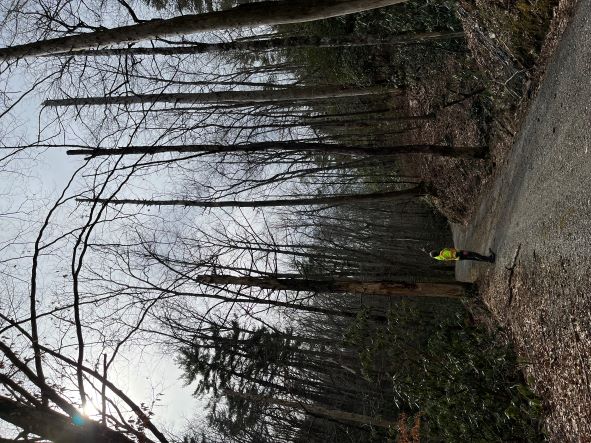 Dead hemlocks are seen along Parson Branch Road near Cades Cove. National Park Service
CADES COVE — Great Smoky Mountains National Park contractors began removing at least 800 dead hemlock trees along Parson Branch Road, an eight-mile primitive backcountry road that connects Cades Cove with U.S. 129 on the western edge of the park.
The road has been closed since 2016 because of the tree hazards and damage to the road surface. The hemlocks succumbed to the hemlock woolly adelgid, an exotic insect that has wreaked havoc on hemlock stands and their accompanying ecosystems.
The road passes several trailheads, and is used by emergency vehicles as needed. The park initially identified some 1,700 trees that posed a hazard to the adjacent roadway, but that number has naturally declined by about half over the past six years.
Friends of Great Smoky Mountains National Park provided $100,000 for the hazard-mitigation project. That was matched with $50,000 from the federal government.
Once the dead trees are removed, work will begin to rehabilitate the roadway and ensure its safety.
The roadway could reopen this summer, according to a news release from the National Park Service.
Hike and learn at Trails and Trilliums Festival in South Cumberland State Park
Written by Ray Zimmerman
MONTEAGLE — Naturalists and nature lovers are invited to South Cumberland State Park April 8-10 for the Trails and Trilliums Festival sponsored by Friends of South Cumberland State Park. The Dubose Conference Center will be the base of operations for activities throughout the park.
Registration opens at noon April 8 with activities for those who arrive early, followed at 5 p.m. by Wine and Wildflowers, a kickoff event featuring author David Haskell. In 2012, “The Forest Unseen” was nominated for the Pulitzer Prize in nonfiction. Haskell is expected to speak about his latest book “Sounds Wild and Broken” released by Penguin Random House on March 1.
The rest of this weekend-long celebration of nature and education will feature activities throughout the park and the community. From Foster Falls to Savage Gulf and Sherwood Forest, participants will enjoy bird walks, wildflower walks, nature journaling and sketching, and a university herbarium and greenhouse tour. The Saturday evening star party is sure to be a hit, weather permitting.
Find a full schedule and registration information at Trails and Trilliums.
Baby whale! Cruise with a humpback and her calf at Tennessee Aquarium 3D movie
Written by Thomas Fraser Sylvia Earle Courtesy Catarina Fazenda
The Tennessee Aquarium IMAX Theater in Chattanooga premiered its new 3D educational movie Ocean Odyssey on March 4.
Author, oceanographer and National Geographic Explorer-in-Residence Sylvia Earle visited the aquarium to help launch the movie, which she and Rupert Degas narrate.
The movie follows a humpback whale mother and calf as they navigate the East Australian Current from the Great Barrier Reef to Antarctica. The planet’s oceans are home to the most diverse and abundant array of life on earth, but they are threatened by climate change, pollution and acidification. Still, life lives on.
The Tennessee Aquarium encourages filmgoers to enhance the 3D film experience with a visit to the Secret Reef exhibit in their Ocean Journey building. This exhibit replicates the Flower Garden Banks off the coast of Texas and Louisiana.
In 1990, Dr. Sylvia Earle became the first woman appointed chief scientist at the National Oceanic and Atmospheric Administration.
She left that agency to work in the private sector to promote healthy oceans and public access to ocean environments, including Mission Blue.
An Ohio woman drowned Thursday while kayaking the Oconaluftee River near Smokemont Campground in Great Smoky Mountains National Park.
It was the first fatality of the year in the park.
Rangers said Megan Thompson, 34, of Cleveland Heights, Ohio was trapped underwater “between a fallen tree and the riverbank” after floating through a rapid. It was not immediately clear whether she was out of her boat.
Her fellow boaters alerted rangers at 2:18 p.m. and her body was recovered at 2:57 p.m., according to a release from the park service.
Drowning is the third-leading cause of death in the Smokies, after vehicle and aircraft accidents.
This story will be updated.
Seal it up: Inefficiency increases energy costs across the board
Written by Thomas FraserEditors note: SACE executive director Stephen Smith is on the board of Foundation for Global Sustainability. Hellbender Press operates under the FGS nonprofit umbrella.
The Southern Alliance for Clean Energy (SACE) released its fourth annual “Energy Efficiency in the Southeast” report, which tracks recent policy developments and performance trends in electric utility efficiency from 2020.
It continues to highlight that despite being a proven low-cost clean energy resource with enormous potential to reduce carbon emissions and customers’ energy burden, Southeastern utilities continue to underinvest in energy efficiency.
As a result, households in many Southeastern states have some of the highest electricity usage and monthly energy bills in the nation. Some states and utilities are making progress, and it’s not too late for local policymakers to take advantage of untapped efficiency savings to help reach crucial decarbonization goals.
- Download the “Energy Efficiency in the Southeast” fourth annual report
- Read an excerpt from the accompanying report blog post below, or read the full post here.
Good enviro reporting from Knox News: Smokies air quality and more salamanders!
Written by Thomas FraserNews Sentinel: State takes path of least resistance with air-quality plans; and researchers are gauging how Southern Appalachian salamanders will respond to climate change.
KNOXVILLE — Local journalists delivered a double tap of critical conservation coverage this week:
The state air quality board is outlining its 10-year haze-reduction plan for Tennessee, and some enviros are arguing the state is not going much beyond the bare minimum required by the feds. That was the crux of a detailed report from News Sentinel reporter Anila Yoganathan that also examined lingering air quality and deposition issues in Great Smoky Mountains National Park. While air quality in some aspects has improved in recent decades, there are still some insidious issues that affect the park’s viewshed, and on occasion, the health of park visitors, too. Acid and nitrate deposition continue to take a toll on park streams.
The report is extensive. A digital subscription is required to view the stories at Knox News, but hopefully they’ll open it up as an introductory freebie.
Speaking of streams and the threat they face:
Science reporter Vincent Gabrielle waded into a story about research at the Tennessee Aquarium delving into the effects of global and regional climate change on Southern Appalachian freshwater denizens such as the black-bellied salamander.
“Their teeming millions make up a substantial proportion of the animal life of a forest. In the headwaters of the Appalachian Mountains, salamanders frequently outnumber fish, birds and other small animals,” Gabrielle reported.
“Lungless salamanders, like the black-bellied salamander, breathe only through their skin. They will notice water pollution, including sediment, agricultural runoff or acidic seepage from old mines, and relocate to cleaner water.” — If they can, we might add. Too often, that is impossible for them.
As global forests fall to blades, tree species go unknown
Written by Thomas Fraser NASA
NASA
BBC: There are 14 percent more tree species than supposed
Nearly 9,000 global tree species haven’t been identified, based on a database that analyzed millions of trees within 100,000 forest segments around the Earth.
Of the 73,300 estimated tree species, the researchers predict there are 9,200 yet to be discovered. Most of the undiscovered and rare species are believed to be in beleaguered tropical rainforests, such as those in the Amazon or Central Africa.
“The researchers used statistical techniques to predict the likely number of tree species, correcting for gaps in existing data,” the BBC reported.
“The findings suggest more must be done to protect the incredible life forms needed for food, timber and medicine and to fight climate change by sucking carbon dioxide from the air.”
More...
Knox County commish subdivides Hardin Valley despite opposition. Again.
Written by Thomas FraserWATE: Knox County Commission greenlights more Hardin Vally development
Knox County Commission approved yet another expansive subdivision in the rapidly developing Hardin Valley area despite pleas from area residents to pause and take a deep breath as residential and commercial development outstrips and overwhelms first responders, streets, roads and schools and other infrastructure — and any pretense of responsible suburban planning and zoning.
The decision comes on the heels of similar land-use fights (such as those reported by Hellbender Press) originated by citizens as housing shortages mean such disputes aren’t likely to go away anytime soon.
“Look at all the development projects instead of each one individually. Look at all the projects in the pipeline, not just the few hundred that are on the books right now,” said Knox County Planning Alliance consulting engineer Lee Muller, according to WATE reporting. “There’s like 4,500 in the pipeline in some stage of approval or construction in the county right now. They need to look at all that and what that requires in terms of schools, sewer, police, fire stations,” Muller told WATE.
(Correction 26 Jan. 2022: During the meeting Muller said 2021 ended with 4,499 homes under construction in the county, not the country. After reported by Hellbender Press, this transcription error was corrected on the WATE site too.)
Outgoing Smokies forester Kristine Johnson leaves behind a legacy of science and communication
Written by Thomas Fraser Appalachian Voices
Citizen Times: Smokies forester bids adieu to her arboreal home
Good read here from the Asheville newspaper about the retirement of Great Smoky Mountains National Park Supervisory Forester Kristine Johnson.
In her three decades at the Smokies, she has tackled issues ranging from exotic and invasive plants to the slow and disastrous demise of the park’s hemlocks due to the hemlock wooly adelgid.
“‘The work we do includes forest health in all aspects,’ said Johnson, who is retiring this month after more than 30 years in the Smokies,” Frances Ligart reported. “Her career has been devoted to reducing the introduction into the park of exotic plants, insects, and diseases.”
Mountain bears in crosshairs of NC sanctuary management plan
Written by Thomas Fraser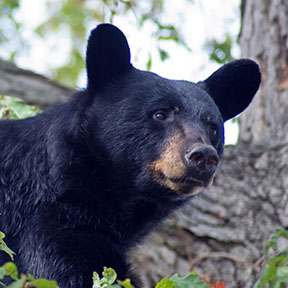 North Carolina Wildlife Resources Commission
Smoky Mountain News: WNC bear-management plan raises some hackles
State wildlife officials in North Carolina are proposing a rule change that would allow hunters to kill black bears in areas that are currently off-limits to “harvesting” of the animals.
The North Carolina Wildlife Resources Commission cites the population boom of the bruins in its consideration of opening up permit hunting in sanctuaries such as Panthertown, Standing Indian and Pisgah.
The proposal is among changes to state wildlife law suggested by the commission for 2022-2023 hunting seasons.
“Allowing hunting in additional sanctuaries will help control the growing population as increased human development reduces hunter access outside the sanctuaries, the Wildlife Commission says, and it will also cut down on human-bear conflicts in those areas,” according to reporting from Holly Kays of Smoky Mountain News.
An outline and rationale for the bear sanctuary hunting rule is available on the North Carolina Wildlife Resource Commission website.